
CASE STUDIES
Custom Labels & Die Cut Adhesives
Inspired by your day-to-day challenges, TLP engineers continuously seek essential improvements in the specialized labels and adhesives we deliver for your application.
Explore case studies of some of these unique solutions right here. (Click image to learn more)

Tamper Seal Sticker for Regulatory Marking

Industrial Nameplate & Product Marking

Cord Wrap Warning Tag with UL Approval

Printing Barcode Labels for Automotive Traceability

Custom Nameplate Labels & Decals For Durable Products

Reducing Labor Costs through Innovative Label Design

Reducing Costs on Low Volume Label Parts
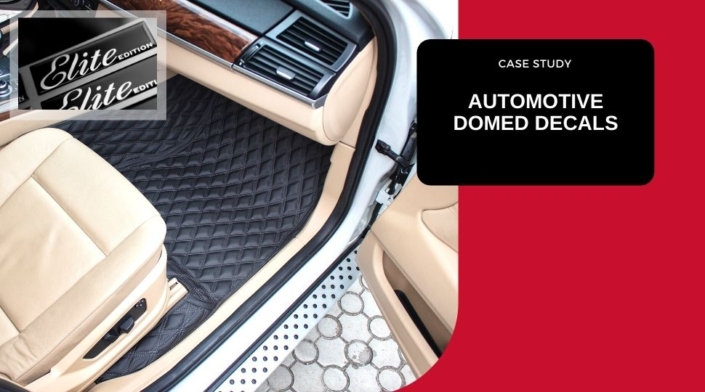
TLP’s Dome Labels & Custom Domed Decals For Automotive Labeling

Extreme Durability Vital for Custom Industrial Tags & Caution Tags

Preventing Fraud with Tamper Proof Security Labels

Ramping Up EV Production with an Optimized Supplier
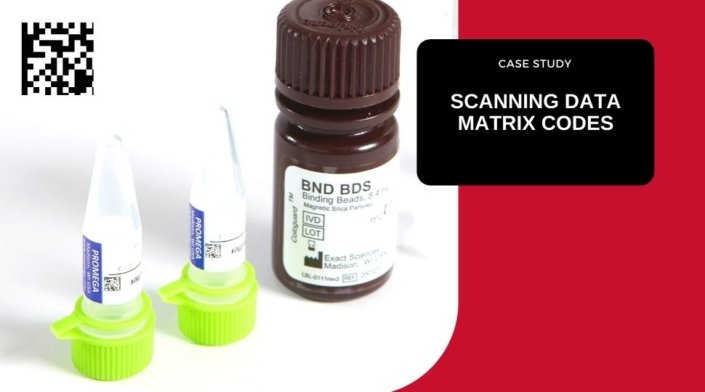
Laboratory Barcode Labels: Data Matrix Barcode Scanning Success
ARCHIVES
Custom Die Cut Solution Eliminates Need for Rivets or Welds in Plastic Surface
 TLP’s specialized expertise in die cutting and adhesive bonding solutions ensures the best results, even for extremely unique applications. This expertise was put to the test when TLP sought to develop a die cut adhesive strong enough to hold a wrist pad to a plastic hunting bow carrier. The adhesive had to be durable enough to hold for several years in indoor and outdoor environments, yet gentle enough to not eat the plastic.
The solution was TLP-605, which was specially die cut in the shape of the wrist pad. This low-surface energy adhesive was designed to not attack plastic surfaces while still maintaining adherence strength. The die cut adhesive proved easy to apply and replaced the need for rivets or welds into the plastic hunting bow.
With its strong combination of technical capabilities and personal commitment, TLP’s die cutting and adhesive solutions provide customers with precise parts that can be used to identify components, bond materials or protect parts and accessories. Read more about our custom die cut adhesive solutions.
Two-Layered Label Adheres to Oily Surface, Withstands Powder Coating
 Unique qualities like practical innovation and relentless focus on our customers help TLP meet exacting label demands every time. Those same traits led TLP to a solution for a label that needed to be applied to an oily steel surface and withstand a powder coating, chemical solutions and paint. The application required a variable-data identification label the customer could print, apply to oil-coated raw steel and run through a high-pressure powder coating process that included three chemical solutions and electrically charged powder coat paint before going into an oven for 25 minutes.
The solution was to create an innovative, two-layered, clear polyester label with a removable, protective mask that is peeled off, revealing the information and graphics printed on the back side of the clear label. Because the printing is on the back side of the label, the information is protected from harsh industrial environments. A logo and sensor mark, which are pre-printed in mirror image on the back of the labels, are also treated for thermal printing.
This enables the manufacturer to add thermally printed variable data to the labels during the manufacturing process. The top side of the label is silicone layered so that a second, protective layer can be removed after the painting process with no residue left behind. The adhesive on the bottom layer of the label sticks to the raw steel and actually bonds with the steel, locking it to the product. No matter the application, TLP’s labels are custom engineered for performance, endurance and reliability. Read more about our harsh environment label solutions.
Top-Coat Labels with Temporary Adhesion Give Industrial Drums Repeat Use
One unique application required identification labels listing company data to adhere permanently to high-density polyethylene drums in a typical industrial environment while allowing a separate, temporary label with content information to be applied to the same drum and removed later. This allowed the drums to be used repeatedly.
Leveraging its strong technical capabilities, TLP determined that the answer was TLP-722 clear polyester facestock, which has a silicone top coating for temporary adherence to other labels. The adhesive solution was TLP-836, a permanent acrylic adhesive ideal for heavy textured surface applications and high or low surface energy plastics.
With a wide array of base materials, finishes and manufacturing processes, in quantities from one to full production runs, TLP’s product identification labels make products and brands pop with the sharpest of colors and vibrant hues. Even in complex situations, TLP’s labels outperform.
TLP shines in any label challenge, helping customers make an impact with bold, durable and attractive labels. Read more about our product identification and branding label solutions.
Durable Laboratory Labels Maintain Identification Standards Even in Harsh Environments
 Medical vial labeling offers its own unique set of challenges, including precise sizing, legibility, durability and FDA compliance. The labels also serve a critical purpose – identifying the contents or associating the contents with a specific patient. Despite the complexities, TLP’s innovative medical labeling solutions are helping to provide correctly identified samples and keep laboratory procedures running smoothly for one customer.
The challenge required a complete analysis of the DNA transfer and labeling process. Each DNA sample is put into a small vial and stored at extremely low temperatures to be mixed later. Once mixed, the DNA is poured into a new, larger container. The identification information is then transferred from the original vial to the new container and the original vial is discarded. The new DNA containers are then shipped to the customer’s end users for research and development purposes.
The process called for a label that would adhere strongly to a small, curved surface (original vial) and provide a means to transfer vital information to a new container while withstanding extremely low temperatures without smudging or smearing. The solution was to create a uniquely shaped label from TLP-949. The center portion of the label adheres to the original small vial.
The ends of the label adhere together to form a “flag” on the end and resolve the “lifting” issue caused by labels whose ends do not wrap entirely around the vial. The “flag” is imprinted with the critical information that must remain with the DNA sample when transferred to other containers. The original label is removed from the original vial and placed onto the new container. This design provides the solution of three labels as one.
TLP’s specially formulated life science labels are engineered to wrap around small vials and withstand extremely cold temperatures – the perfect combination of functionality for medical applications. Read more about our medical and laboratory label solutions.
UL-Approved Labels on Pumps Live Up to the Challenge on Non-Standard Surfaces
 To maintain compliance, customers need more than just a regular label supplier. Since 1985, TLP has been an Underwriters Laboratories-certified provider of high-performance regulatory and warning labels. And the difference shows.
When TLP was asked to manufacture labels to be used on pumps that could be submerged or buried underground for long periods of time, it knew that not just any label would do. The labels had to be approved for UL 969 Marking and Labeling Systems on non-standard surfaces, including nitrocellulose lacquer, epoxy powder coat and urethane powder coat and imprinted with variable information.
TLP performed extensive prototyping and lab testing to ensure all key performance criteria were met. The final design included customizing raw material specifically for the application and printing on white or silver polyester with acrylic adhesive, with a clear polyester overlaminate to protect the graphics. The labels were then variable imprinted by the OEM using a thermal transfer printer and an approved UL ribbon. The variable imprinted information included the model number, serial number, lot code and other information specific to the product.
Whether its labels for power tools, electronics, outdoor power equipment, under-the-hood components or recreational vehicles, TLP’s durable label solutions delivering crucial hazard information while adhering securely and standing up to the toughest environmental conditions. Read more about our UL-approved and regulatory warning label solutions.
Die Cut Adhesive Solution Enhances Automotive Assembly Line Efficiency
 TLP’s proven die cut adhesive solutions are ideal when tension needs to be dispersed along the length of the bond instead of concentrated in several places (as with rivets or screws). Die cut solutions also are ideal due to their ability to expand and contract in heat and cold, instead of becoming brittle like rivets and welds. This makes them particularly well suited for automated assembly, especially in Tier 1 automotive applications where ISO/TS 16949 certification is necessary.
Leveraging its decades of technical capabilities and relentless focus, TLP developed a die cut adhesive solution that enhanced assembly line production for one customer. Normally, a ceramic blanket is wrapped around catalytic converters in automotive engines and must be held in place with adhesive until the converters are encased and welded. The die cut adhesive strip that TLP developed was easy to use, consistent and reliable on the assembly line and aggressively held the ceramic blanket in place.
TLP’s adhesive solution was a tab, supplied in strips. Assembly line workers quickly lifted the strip off the roll and applied it to the ceramic blanket wrapped around the can core. The new process has sped up efficiency and production on the line and increased precision. It’s just another example of how TLP’s seasoned engineers ask the right questions to pinpoint customer requirements and continuously seek better answers through smarter technology and design. Read more about our custom die cut adhesive solutions.
High-Performing Vial Labels Withstand Temperatures Less Than -70°

How does TLP continue to meet complex engineered label needs? By creating new configurations and processes designed to withstand the unique conditions of harsh environments. TLP offers a vial label designed to survive extreme temperatures. For example, TLP-937 is a label material engineered for small vials containing DNA that are dropped in liquid nitrogen five seconds after label application.
The labels contain critical information that must be transferred to larger containers. Because some labels can lift or flag off when applied to small, curved surfaces, TLP designed this label material to be thinner so that it adheres better to the vial. The label’s shape is designed so that the center portion adheres to the vial and the ends of the label stick together to form a tab on the end. This tab is imprinted with the critical information that needs to remain with the DNA when being transferred to the new container.
The label material also was tested in multiple extreme temperatures – from room temperature, to -70°, -20° and 4° F, in liquid nitrogen and dry ice – to ensure against frosting and condensation, which could negatively impact the label’s performance as well as dispense at high speeds. For labels that must withstand harsh environments under the toughest conditions, TLP delivers tough materials for tough challenges. Read more about our harsh environment label solutions.